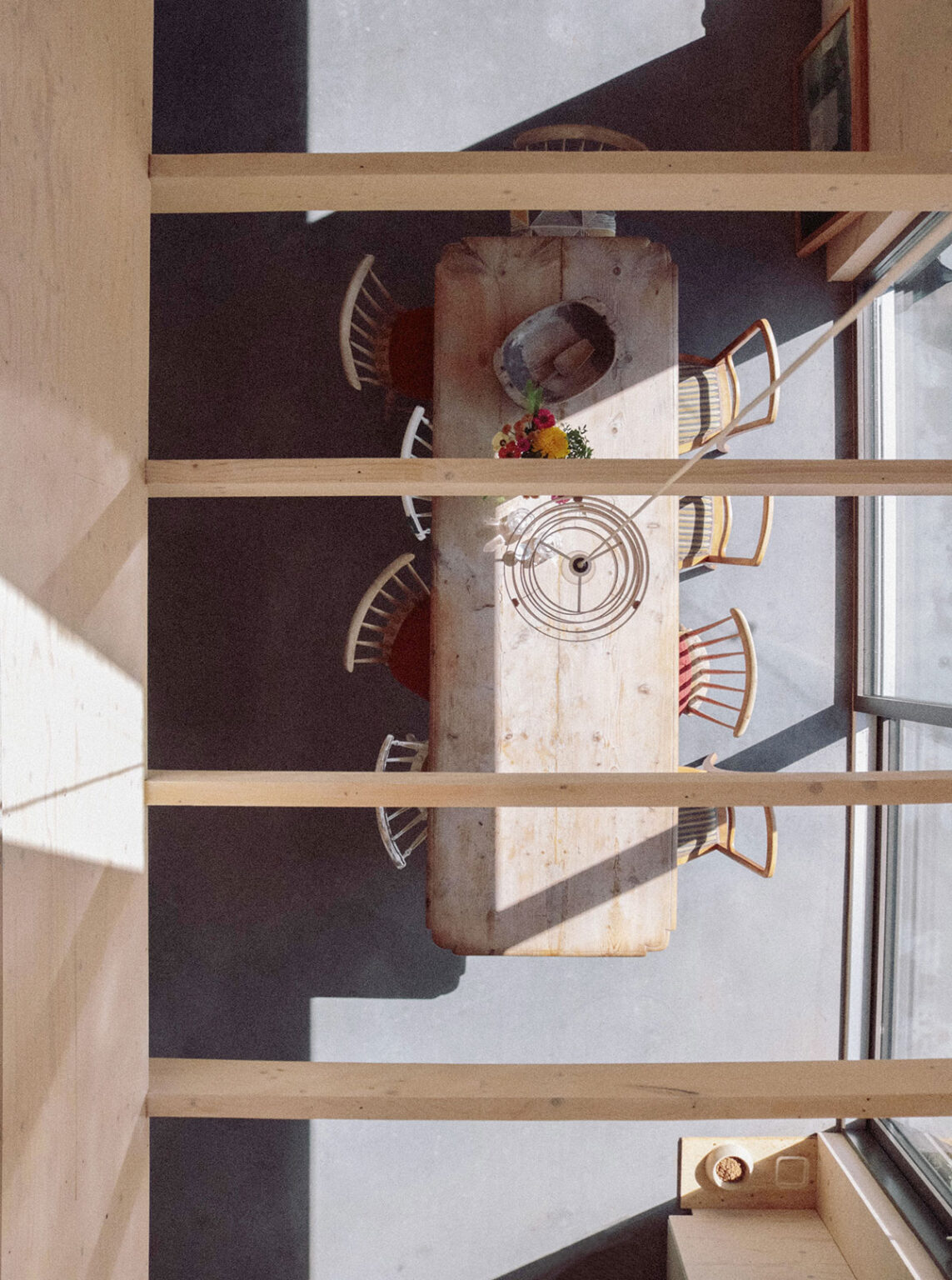
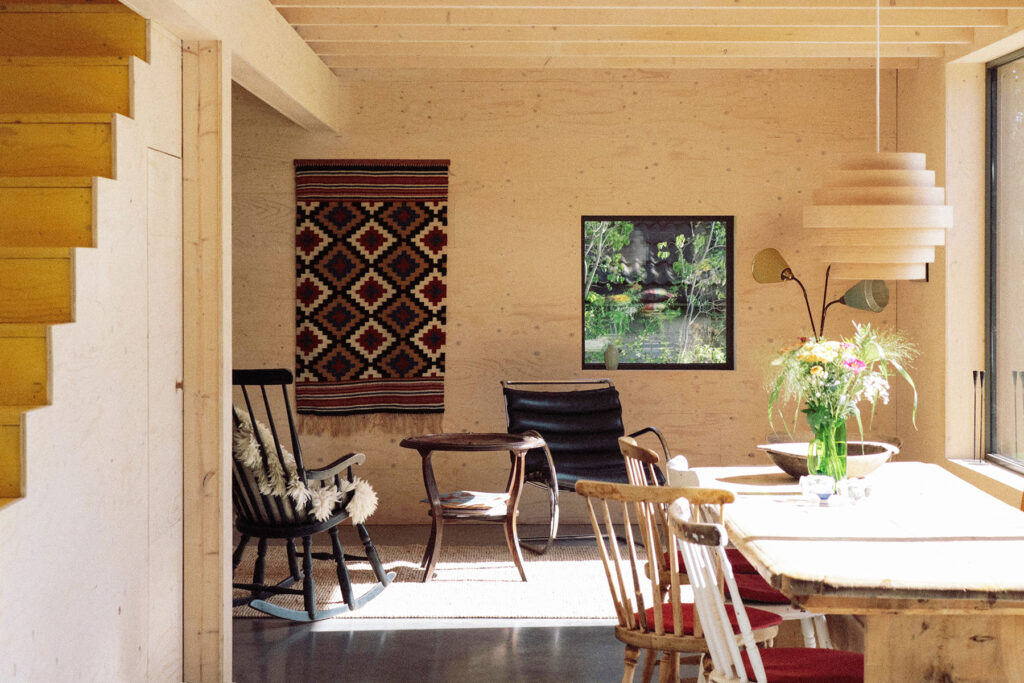
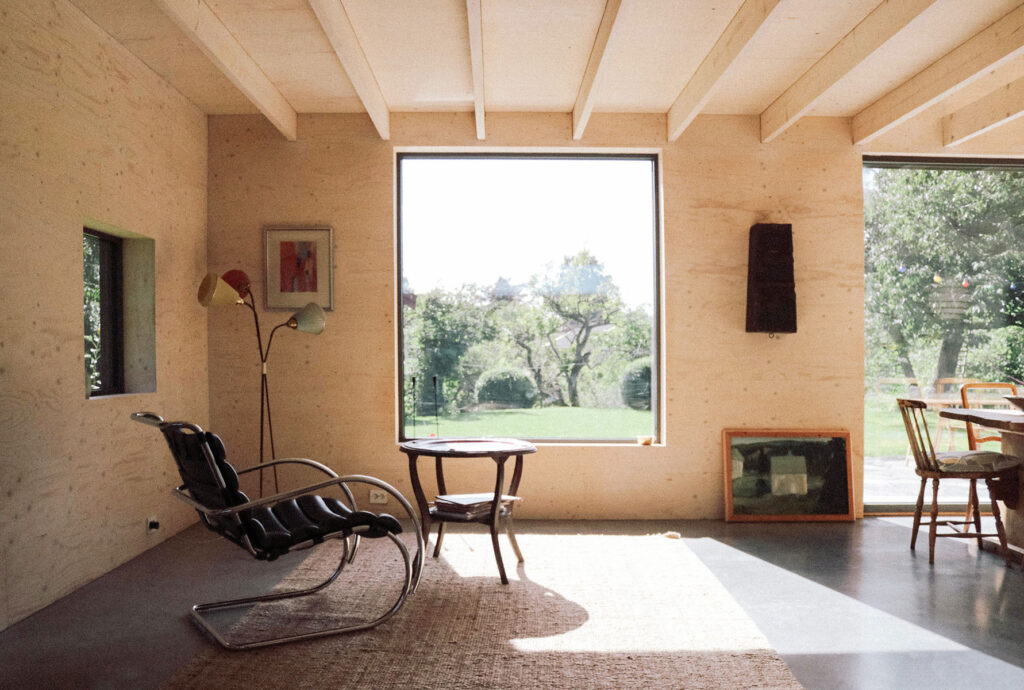
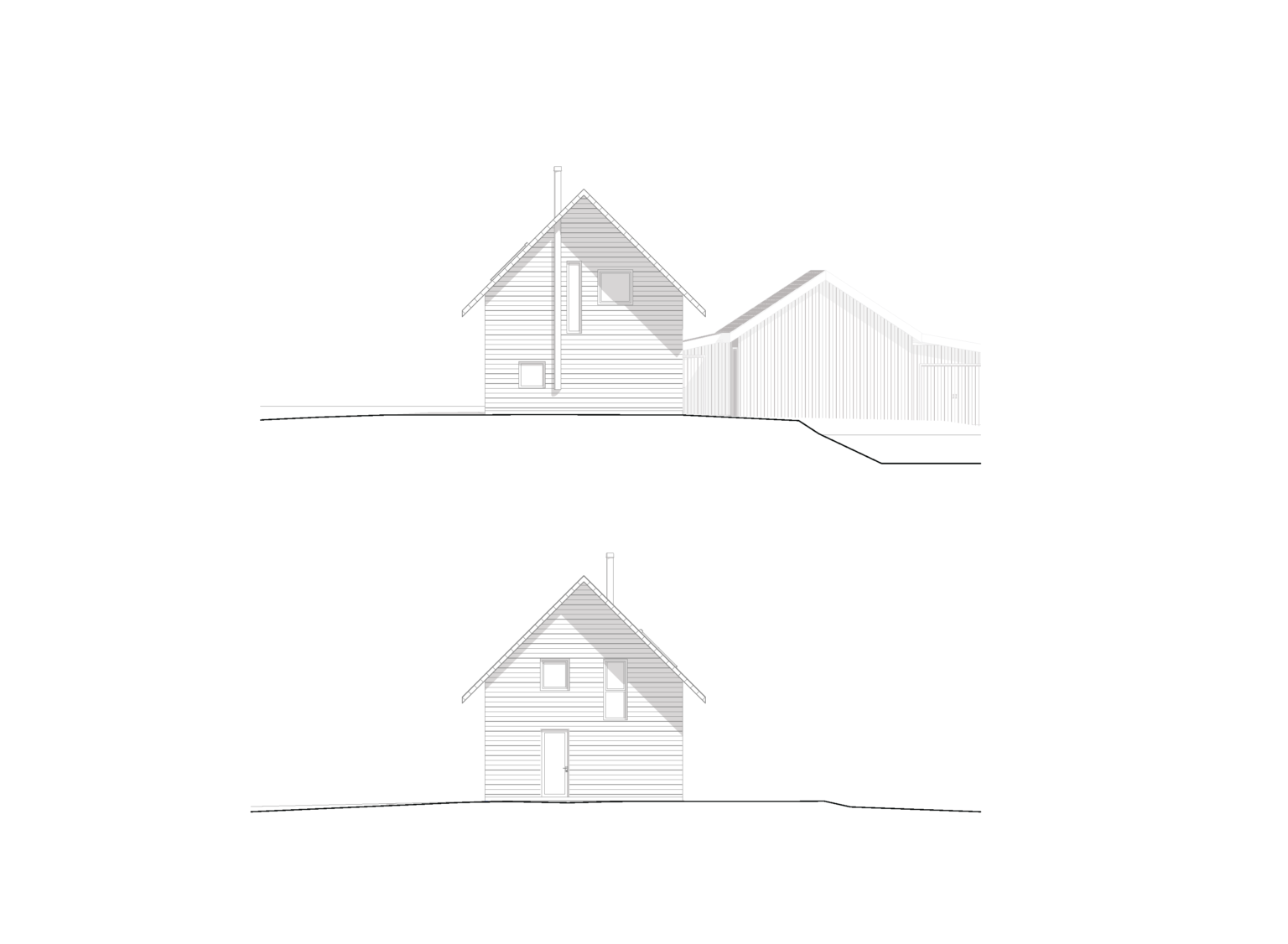
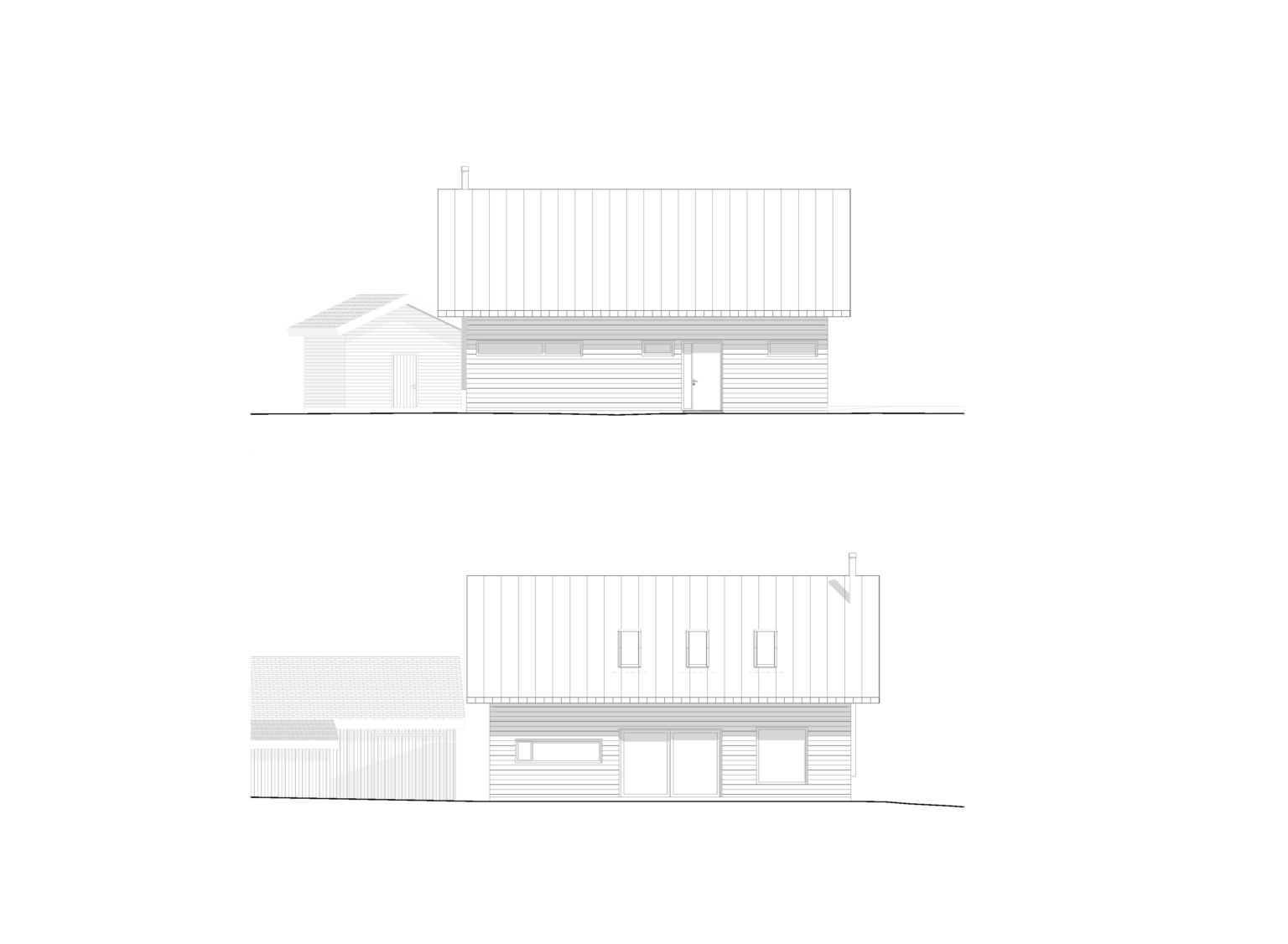
En enebolig for en familie på fire bosatt i Oslo. Familien ønsker å bruke eneboligen til fritidsformål, men med standarden til en enebolig. De stramme økonomiske rammene for prosjektet var førende i prosjektet, men det var et ønske om å fortsatt ha mye eksponert treverk og luftige romlige kvaliteter.
Fokuset i oppgaven var å få en rasjonell og effektiv bygningskropp. For å holde kostnaden nede, valgte vi å skrelle ned mange av lagene mellom etasjene.
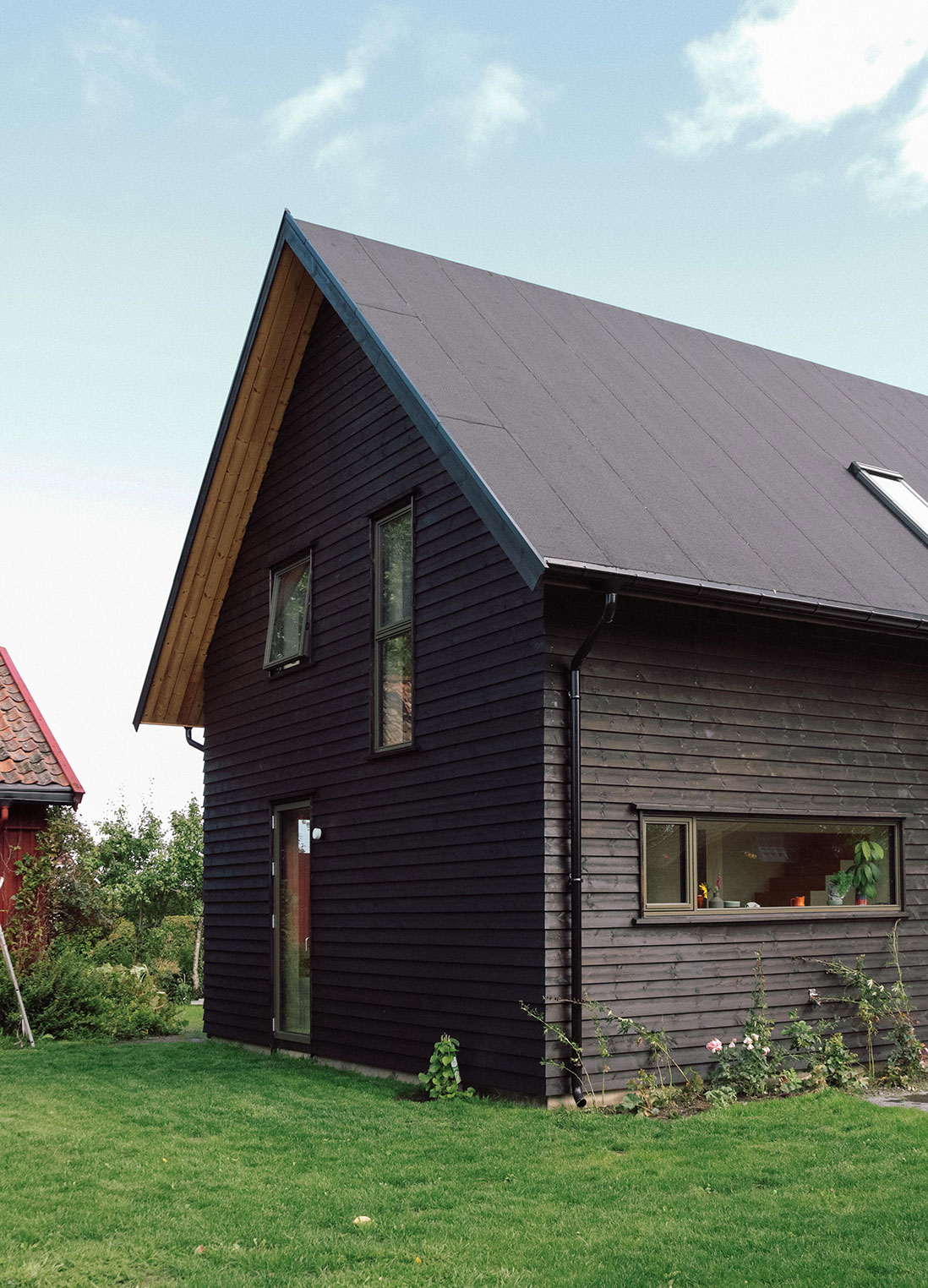
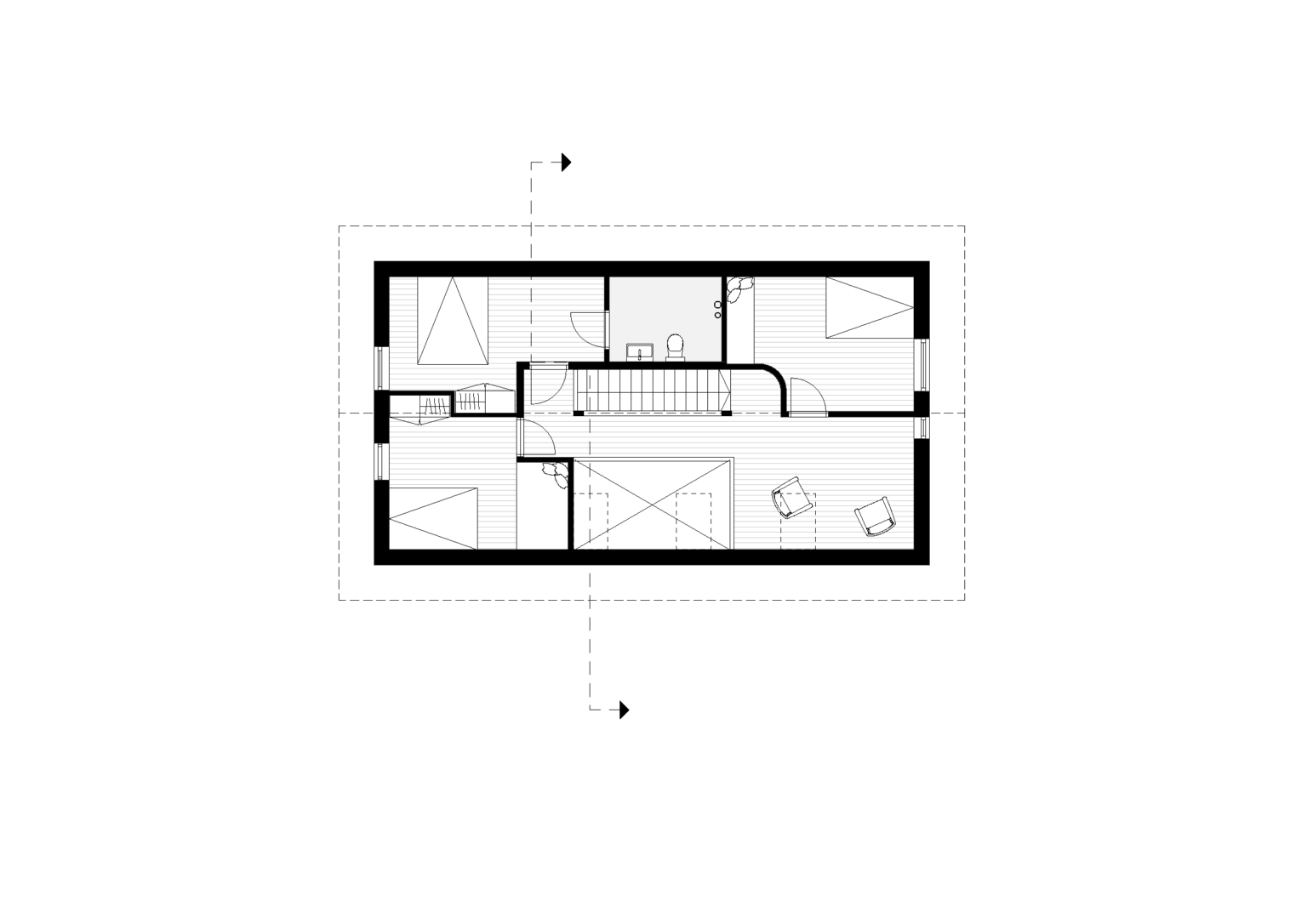
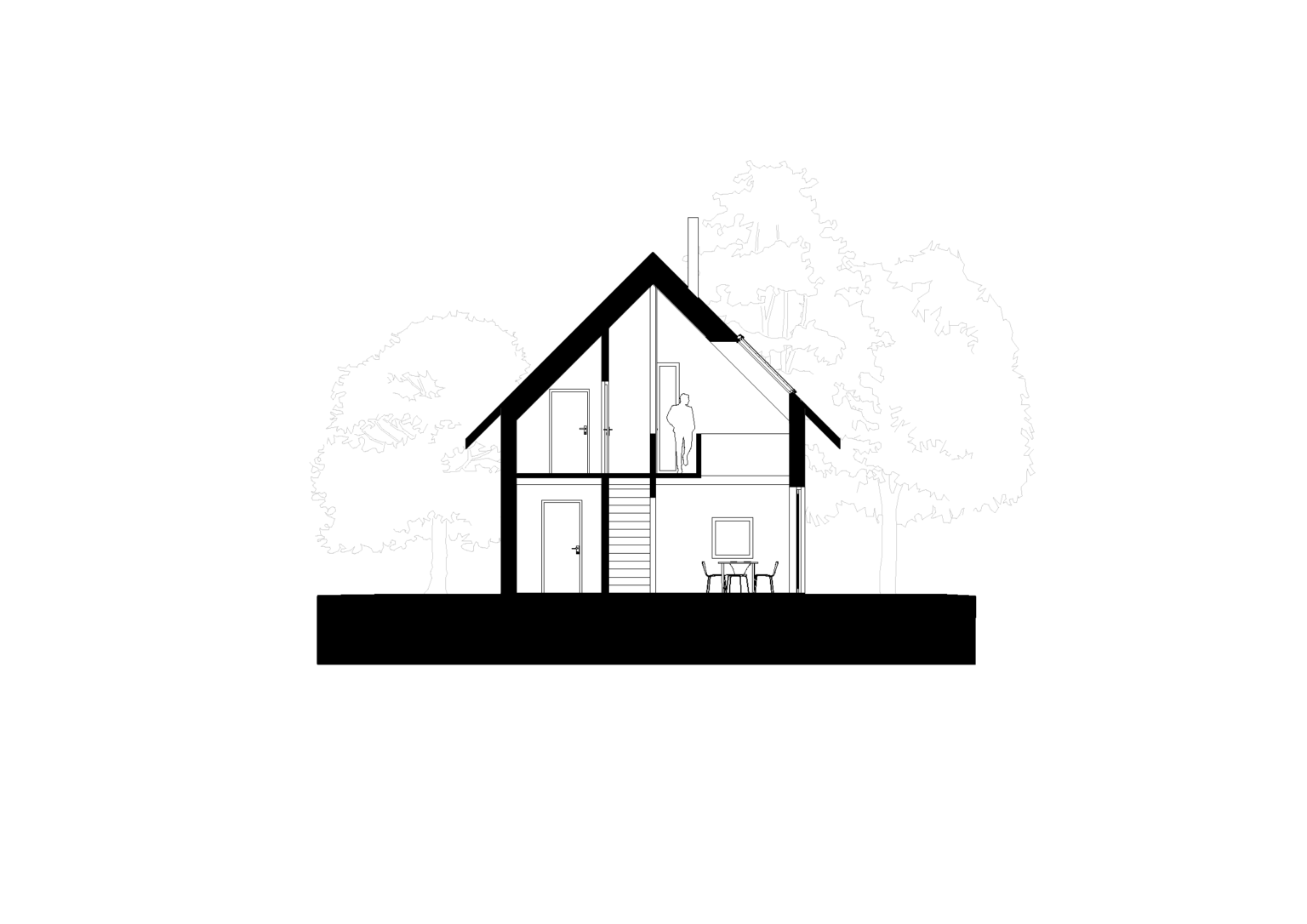
Kunden hadde i utgangspunktet sett for seg et fotavtrykk på 120 kvm, men ved å effektivisere plantegning fikk de alt de ønsket seg med en grunnflate på 87 kvm. Den bratte takvinkelen tilfører 2 etg luft, og gjør at hele ‘’loftsetasjen’’ kan programmeres med rom.
Ferdigstillt vår 2024
———————–
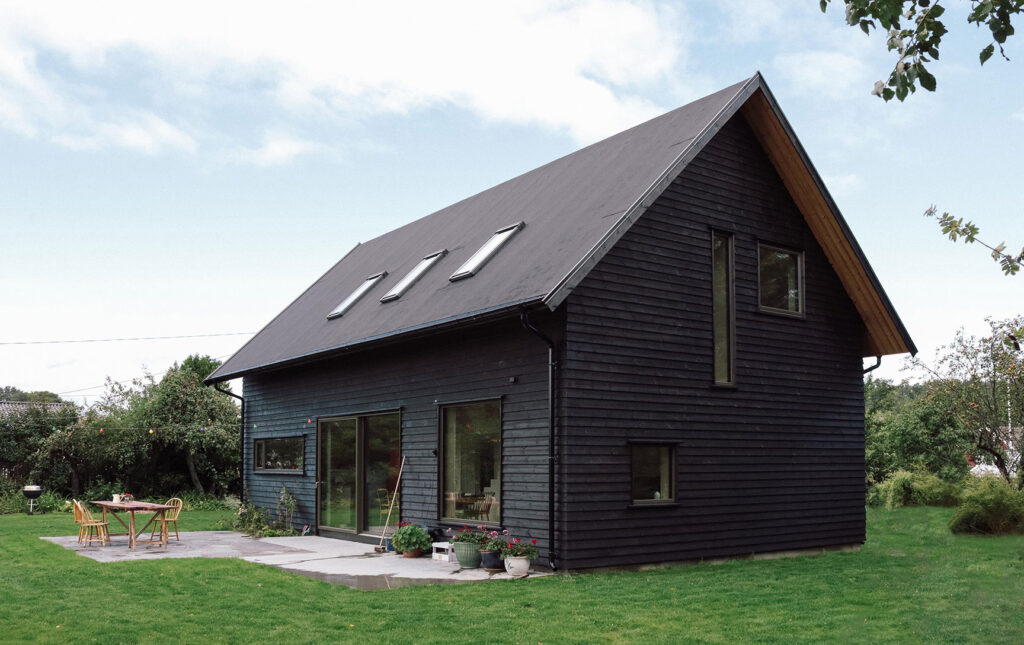
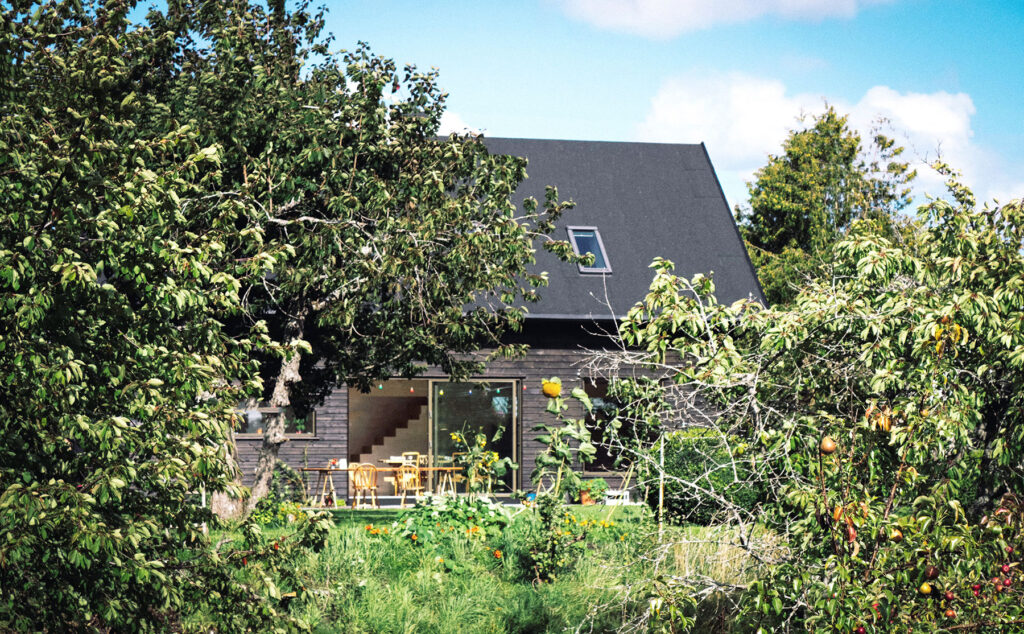
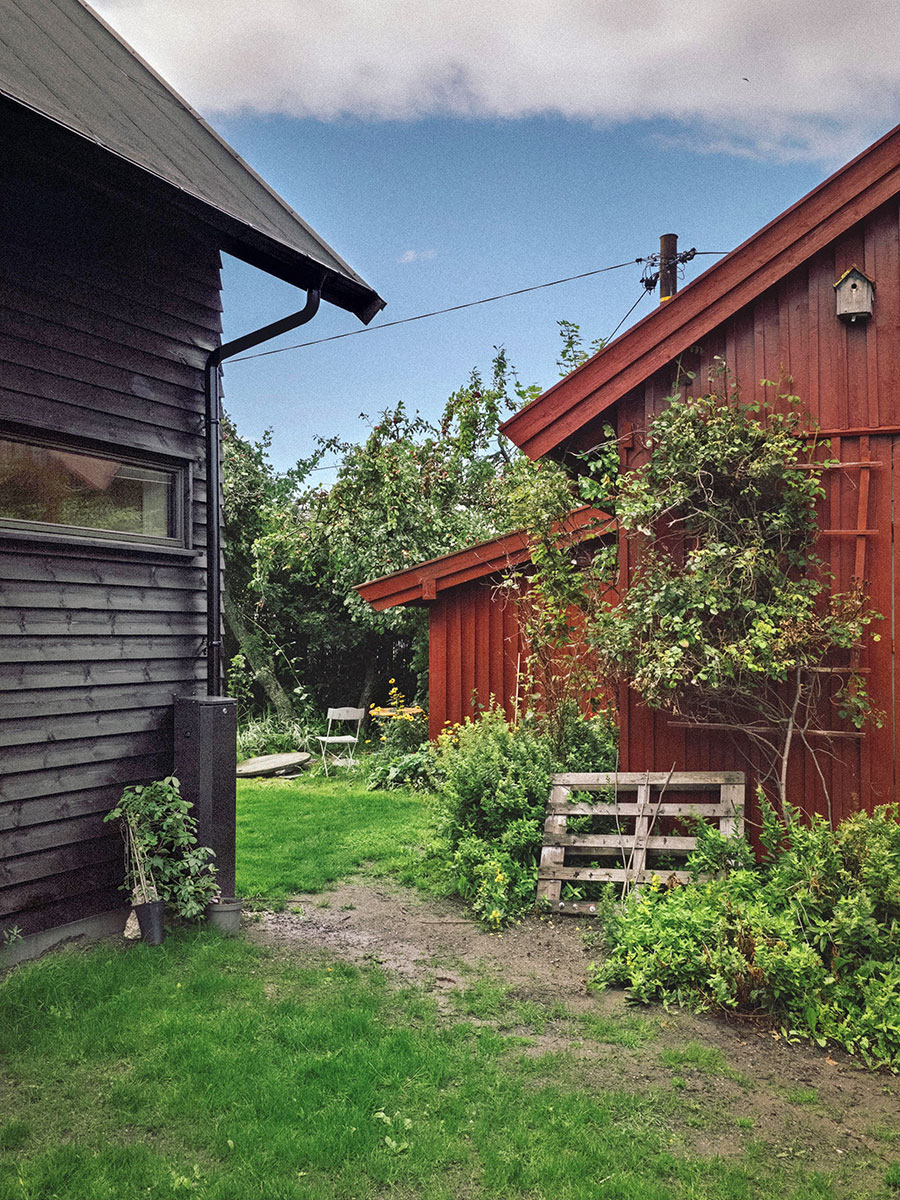
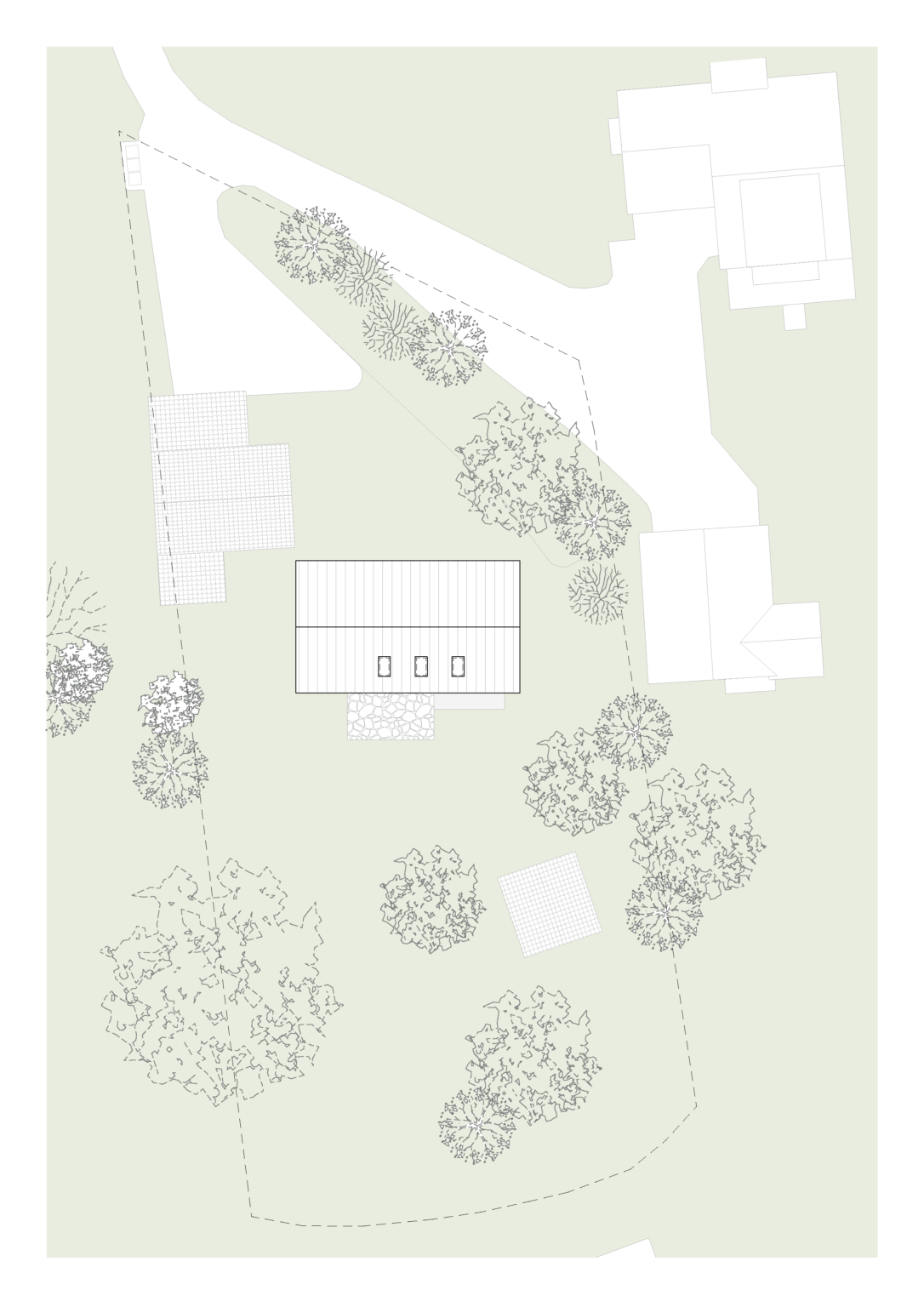
House Grimstad is situated North-west of Grimstad town center, in a small cluster of buildings surrounded by farm fields. The site is long and narrow, stretching from a gravel road in the northeastern corner to a sloping garden of fruit trees to the south-west. The house, designed for a family of four, balances cost efficiency with modern comfort. Although intended as a vacation home, it is built to the standard of a year-round residence, providing flexibility and durability for the family’s needs. It is placed next to an old barn, and opens up towards the trees and the fields.
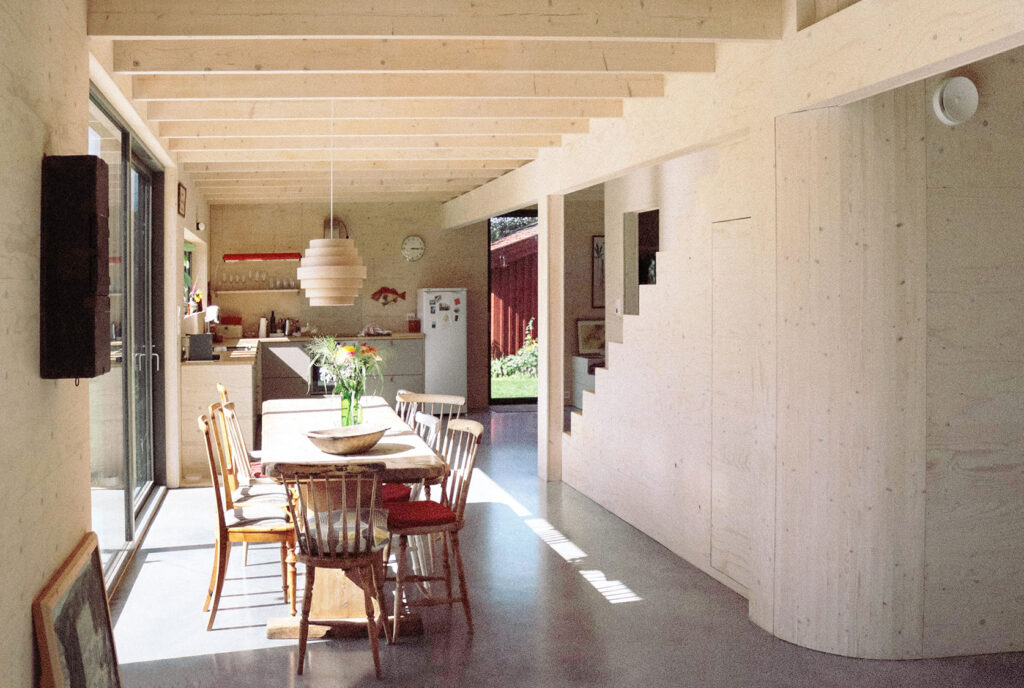
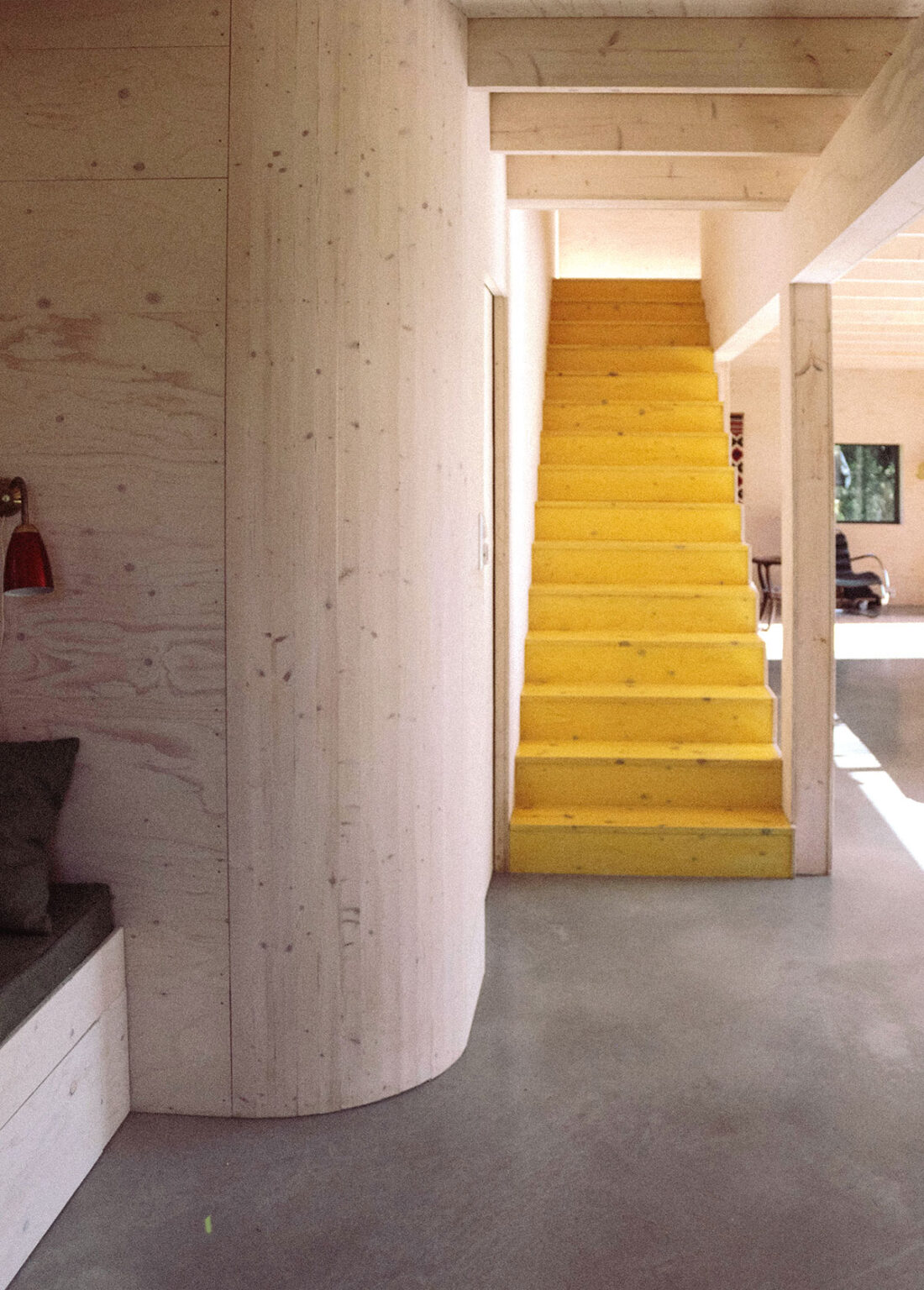
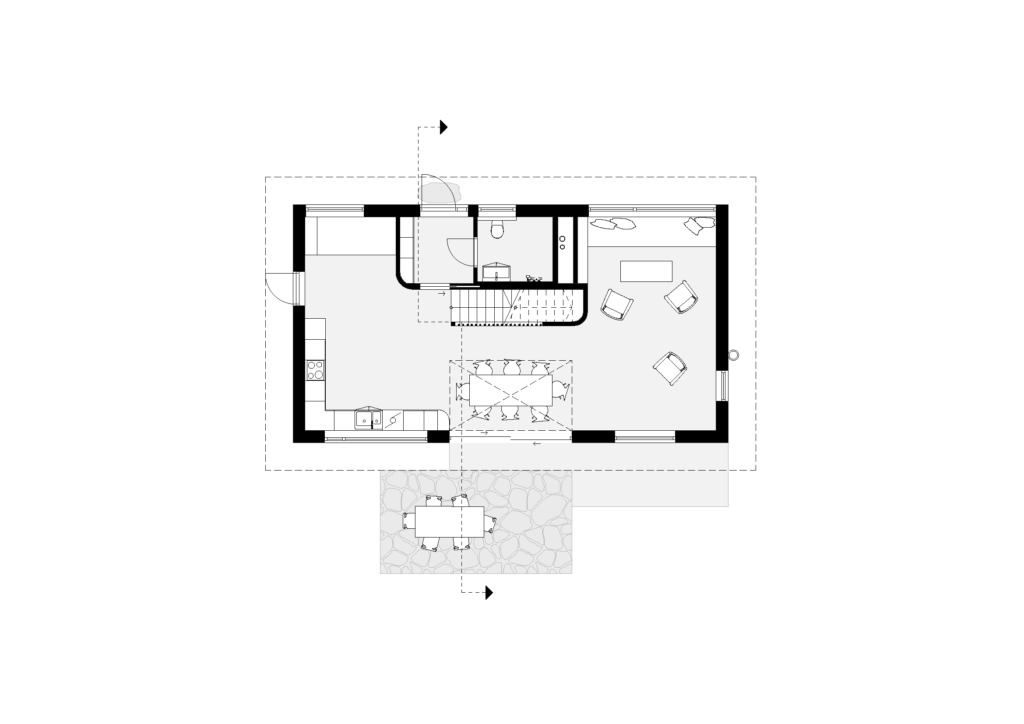
The floor plan creates different open but private sones, without physical constraints. The first floor extends vertically to the second floor over the dining area, and the multiple glass doors create a fluid connection to the garden. The house aims to erase the transitions between open/private, 1st floor/2nd floor, and inside/outside. The first floor provides a kitchen, dining area, living room and a bathroom. . The second floor consists of three bedrooms, a bridge, an open living room and a toilet.
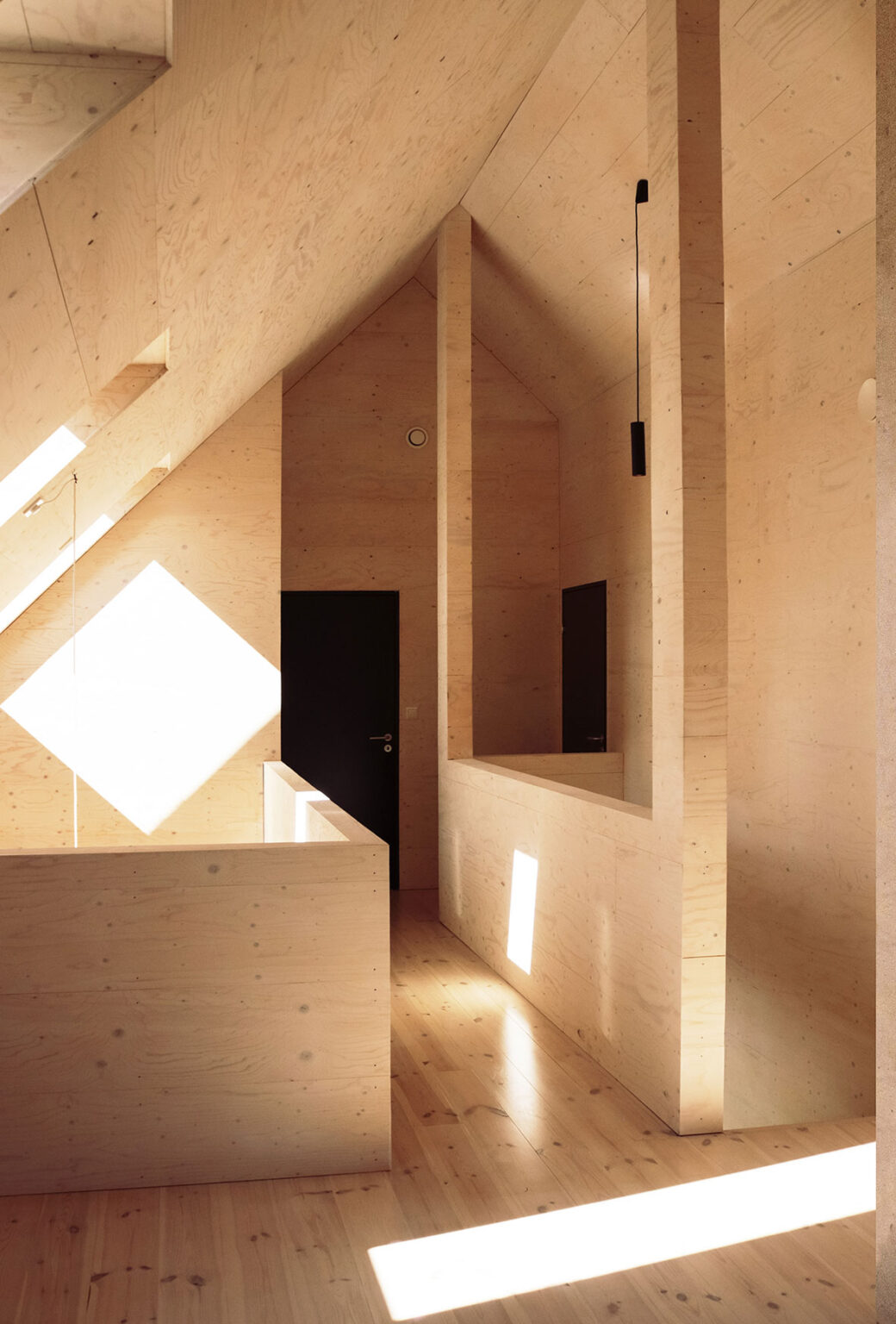
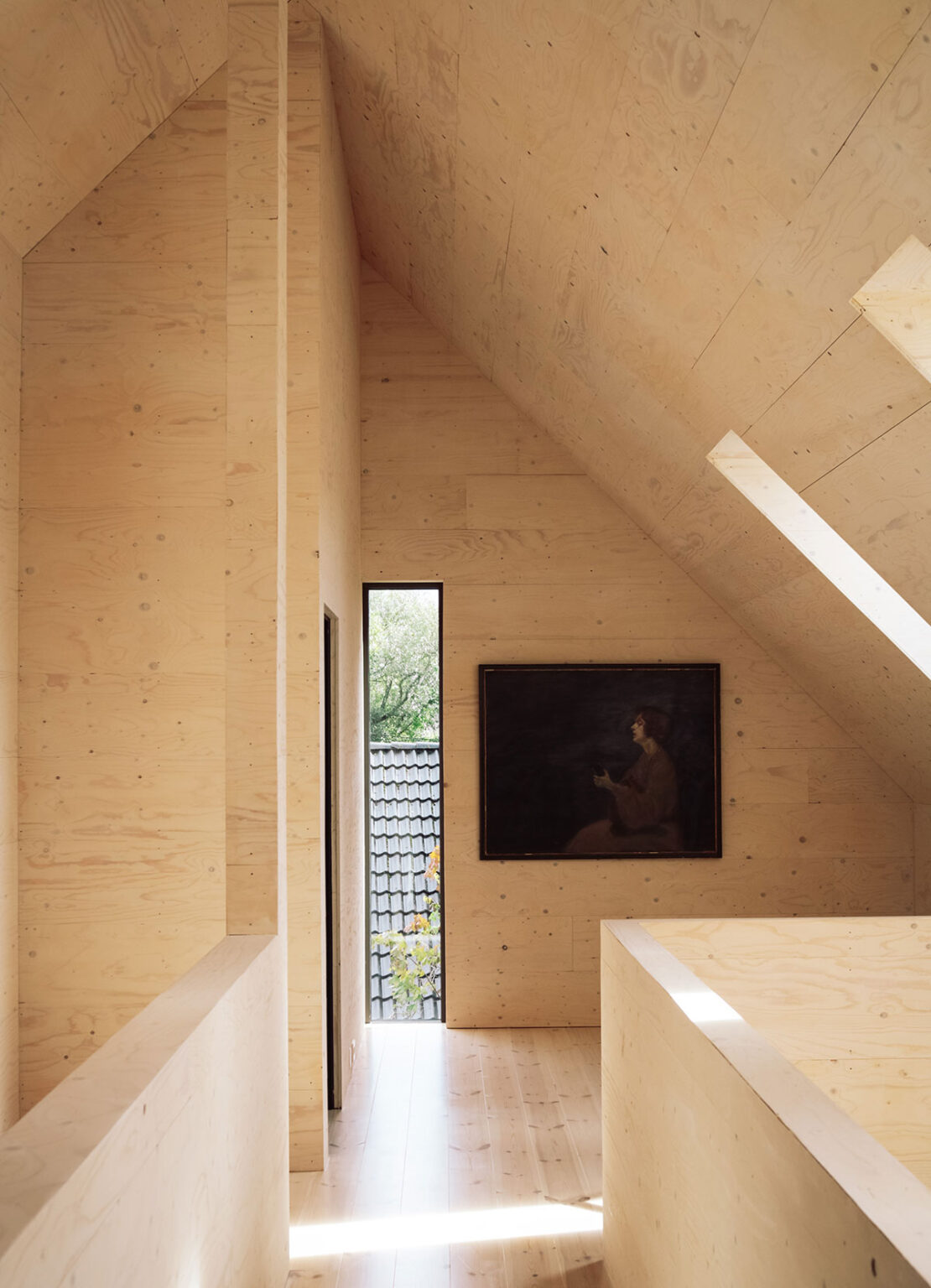
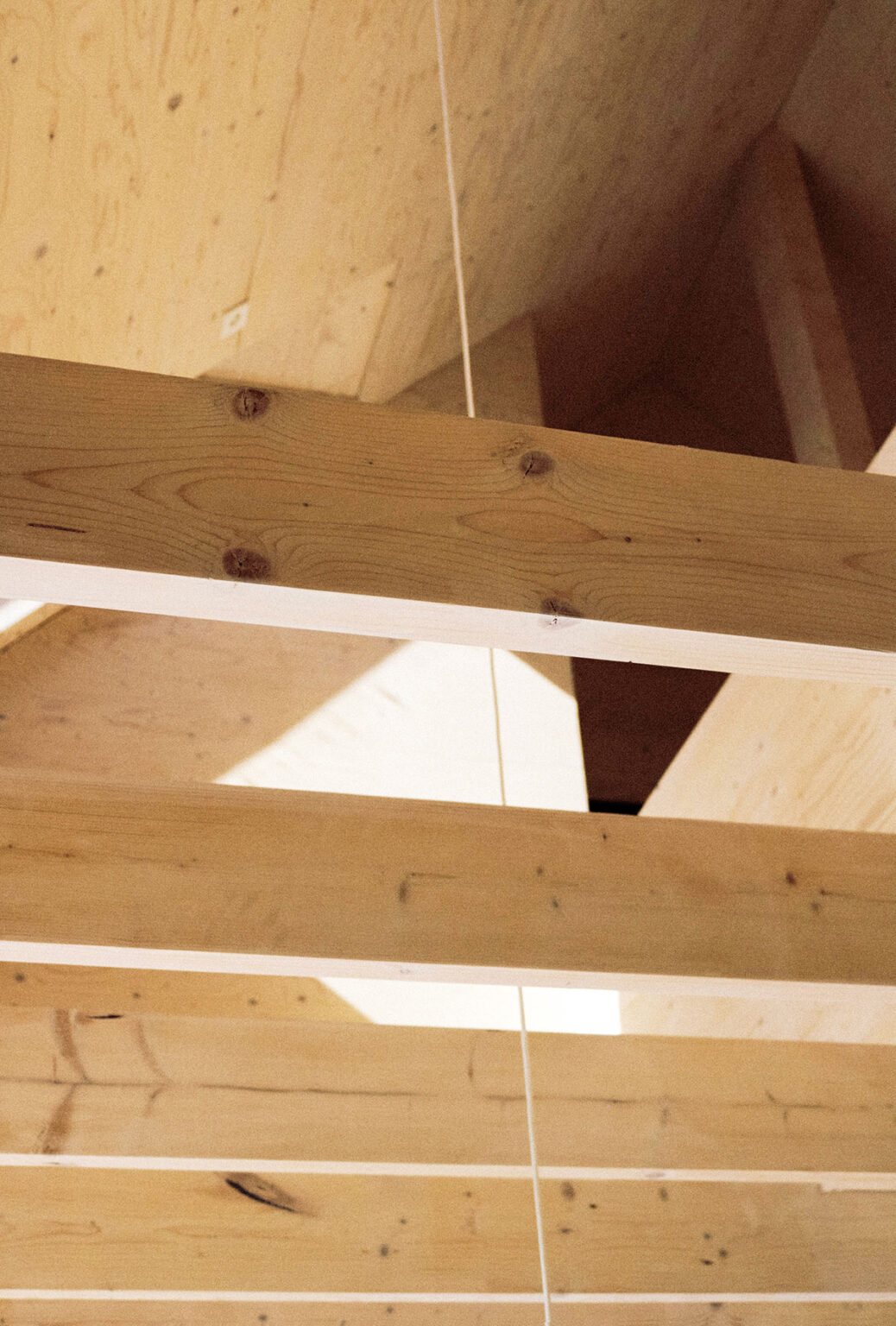
The project’s steep gable roof, and simple rectangular shape has similarities to the existing barn, without competing for attention. The house aims for simplicity in both form and material, with an exposed concrete floor, exposed timber joists and spruce ergoboard plywood covering walls and ceilings.
The spruce ergoboard is usually used as a structural plywood, and is most often covered up with tiles, plasterboard or furniture plywood. Because the carpenter worked alone, it was important to choose an interior cladding that was easy for one person to maneuver, while also being a cost-effective material. The ergoboard is used as interior cladding for both the walls and the ceiling, creating a warm atmosphere.
The family wanted a house that felt both contemporary and grounded in its environment. It was a design goal to create a compact footprint, where the family of four could use the first floor without stepping on each other’s toes, while still having an open and fluid space. To achieve this we organized the house around the two main columns that carry the ridge beam at the top of the house. These two columns with the help of two glulam beams in the first floor created distinct zones in an otherwise open plan house.